
Voices from the Project: Restoring South Africa’s thicket ecosystems with Spekboom
Large-scale ecosystem restoration depends on more than planting trees or shrubs. It requires local knowledge, long-term commitment and a deep understanding of the landscapes being restored.
In South Africa’s Eastern Cape, the Eastern Cape Restoration Project is restoring degraded thicket ecosystems through the reintroduction of Spekboom (Portulacaria afra), an indigenous plant known for its ability to support biodiversity recovery, improve soil health and sequester carbon. Working on the ground to make this restoration possible is Frikkie de Beer, Project Manager for the initiative.
In this interview, Frikkie shares his personal journey into environmental restoration, explains why Spekboom plays such an important role in ecosystem recovery, and discusses the long-term vision for restoring biodiversity across the landscape.
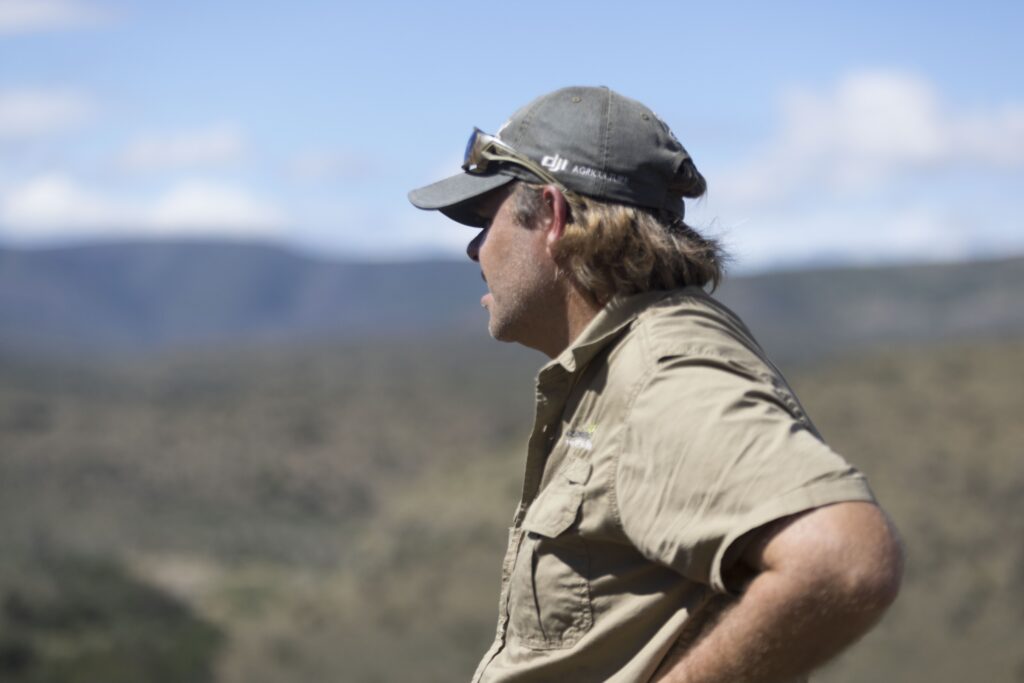
Dear Frikkie, explain to us who you are, what you do for a living and why you do it.
I am Frikkie de Beer, born in the Limpopo Province of South Africa. I am 41 years old. From a young age, I felt most at home in nature, which naturally led me to study Game Ranch Management and begin building a career in the environmental sector.
Over the years, my career has taken me through diverse fields including agriculture, nature conservation, construction, and social work. I always thought that my career was so diverse and wondered in what direction I would specialise. That is, until I found this job. All my experiences, qualifications and passions suddenly came together into this one job. I love working in nature while I make a difference in people’s lives and at the same time better the environment.
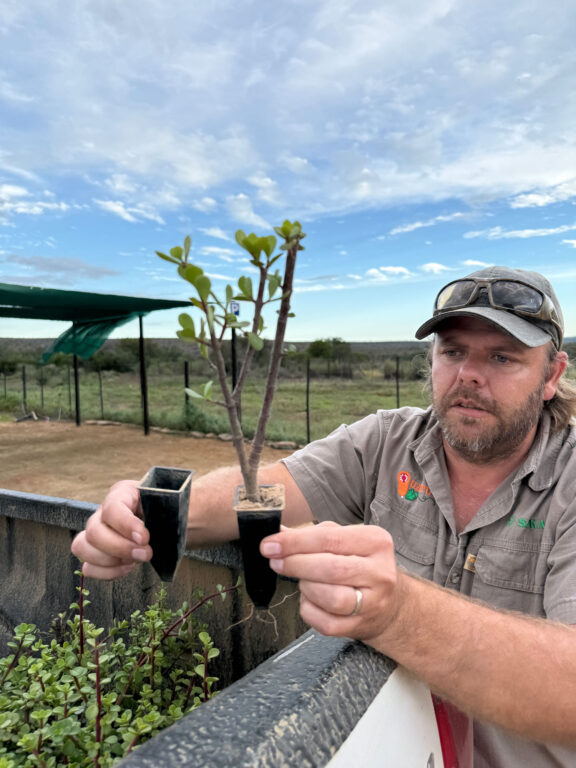
From your perspective as someone working on the land, what makes Spekboom such a special plant?
Spekboom (Portulacaria afra) is a succulent plant indigenous to South Africa and naturally found in the thicket ecosystems of the Eastern Cape. It is particularly well suited to semi-arid environments and is highly efficient at capturing and storing carbon dioxide within its biomass and the surrounding soil. Through photosynthesis, it converts atmospheric carbon into roots, stems, and leaves, contributing meaningfully to climate mitigation within its native biome.
Beyond its carbon storage potential, Spekboom plays a powerful ecological role. As leaves fall and decompose, they add organic matter back into the soil, improving soil structure, nutrient availability, and water retention. Over time, this helps restore degraded land, rebuild soil health, and create shaded, cooler microclimates that allow other indigenous plant species to re-establish and thrive.
One of Spekboom’s most remarkable qualities is its resilience. In the semi-arid Eastern Cape Karoo*, it is able to survive and regenerate under harsh conditions. This makes it an ideal species for restoring landscapes that have been degraded by overgrazing and other forms of human pressure, supporting both ecosystem recovery and long-term climate resilience.
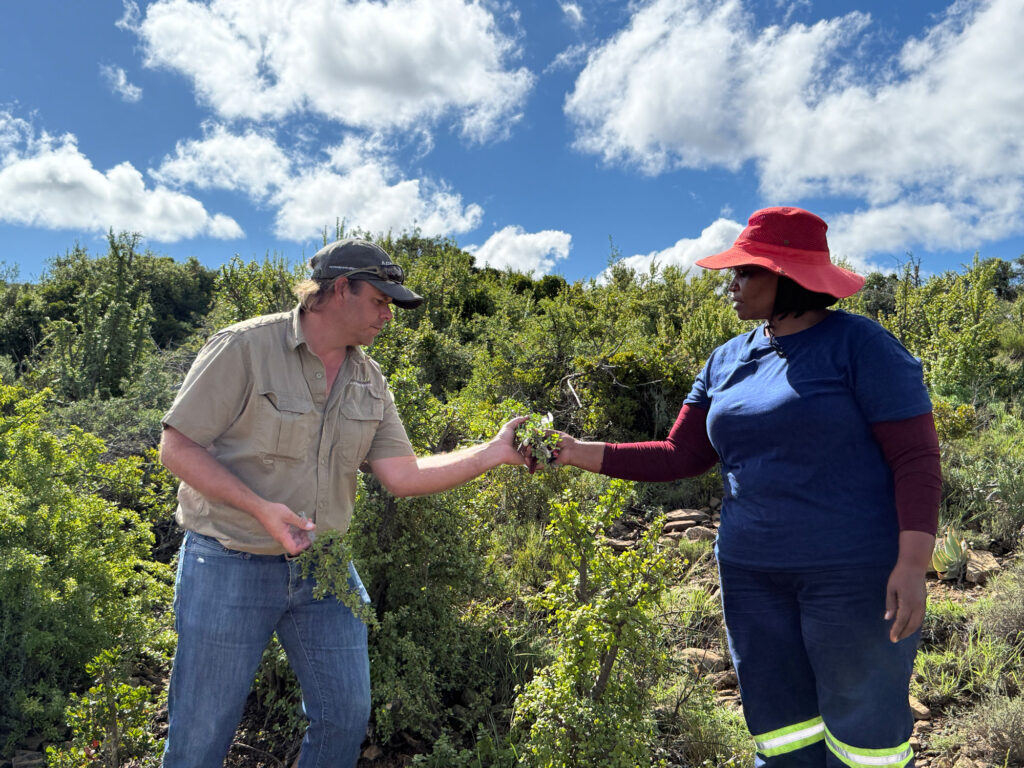
Can you describe how Spekboom thickets create microclimates that help other native species to re-establish themselves? And how important is the return of other indigenous plants alongside Spekboom for overall ecosystem recovery?
Spekboom thickets create much-needed shade so the soil does not dry out so quickly in the hot, semi-arid climate. When the leaves fall to the ground, they form a natural cover that helps protect the soil and keep moisture in the ground. Over time, these leaves break down and mix into the soil, improving the soil structure and adding nutrients back.
Spekboom acts as an “ecological engineer”, helping to create the right conditions for the natural thicket ecosystem to return. With better soil conditions and more moisture, other indigenous plant species are able to germinate, grow, and produce seed again.
An ecosystem cannot exist with only one plant species. It needs a variety of plants to attract different insects, birds, and animals, and each of these plays a role in keeping the system balanced. Many plants and animals in the area are specially adapted to live in this unique environment. If the ecosystem is not restored, some of these species can disappear.
Land degradation often happens when key species are lost due to human interference. When we restore Spekboom, we are not only planting one species, but we are helping to rebuild the diversity and balance of the whole ecosystem. In nature, diversity means health.
What is the vision for the conservation area planned around the restored Spekboom habitat? And how could it benefit both nature and people here?
The vision is for the project to become a legally protected area where we can reestablish all the original indigenous flora and fauna back into the area, from the smallest plant to the biggest elephant.
*A Karoo is a vast, high-altitude semi-desert or arid plateau region in South Africa.
Explore more about the Eastern Cape Restoration Project in this video: