
How Spekboom restoration supports climate action and ecosystem recovery in South Africa
For decades, intensive grazing in South Africa’s Eastern Cape has transformed dense subtropical thicket ecosystems into degraded landscapes characterised by soil erosion, biodiversity loss and reduced agricultural productivity. As vegetation disappeared, significant amounts of carbon stored in plants and soils were also released.
The same was happening in our project area in South Africa. The Eastern Cape Restoration Project therefore aims to reverse this trend by restoring over 2,300 hectares of degraded land through the reintroduction of Portulacaria afra, commonly known as Spekboom. Spekboom is a resilient succulent shrub native to South Africa that plays a vital role in thicket ecosystems. By restoring this indigenous species, the project aims to rebuild ecosystem functions, support biodiversity recovery, sequester carbon, and create socio-economic opportunities for local communities.
What makes Spekboom uniquely suited to ecosystem restoration?
It is one of the defining species of South Africa’s subtropical thicket biome. Its ecological characteristics make it particularly well suited to restoring landscapes in semi-arid environments.
It forms a dense evergreen canopy that helps to retain soil moisture, reduce erosion, and create favourable conditions for other native species to become established. Spekboom also exhibits a specialised form of photosynthesis that enables it to open its stomata primarily at night, thereby reducing water loss whilst continuing to absorb carbon dioxide. This adaptation makes Spekboom highly drought-tolerant, enabling it to thrive in challenging environmental conditions.
Restoration activities involve planting cuttings, known as ‘truncheons’, which are harvested from healthy Spekboom stands. As the plant propagates readily from cuttings, irrigation is generally not required during the establishment phase. As the vegetation develops, the canopy shades the soil, moderates temperature fluctuations, and reduces evaporation. Over time, organic matter accumulates, the soil’s structure improves and ecological processes begin to recover. The concept is so effective that the World Bank has developed a programme to restore degraded land in South Africa’s Eastern Cape.
A measurable contribution to climate mitigation
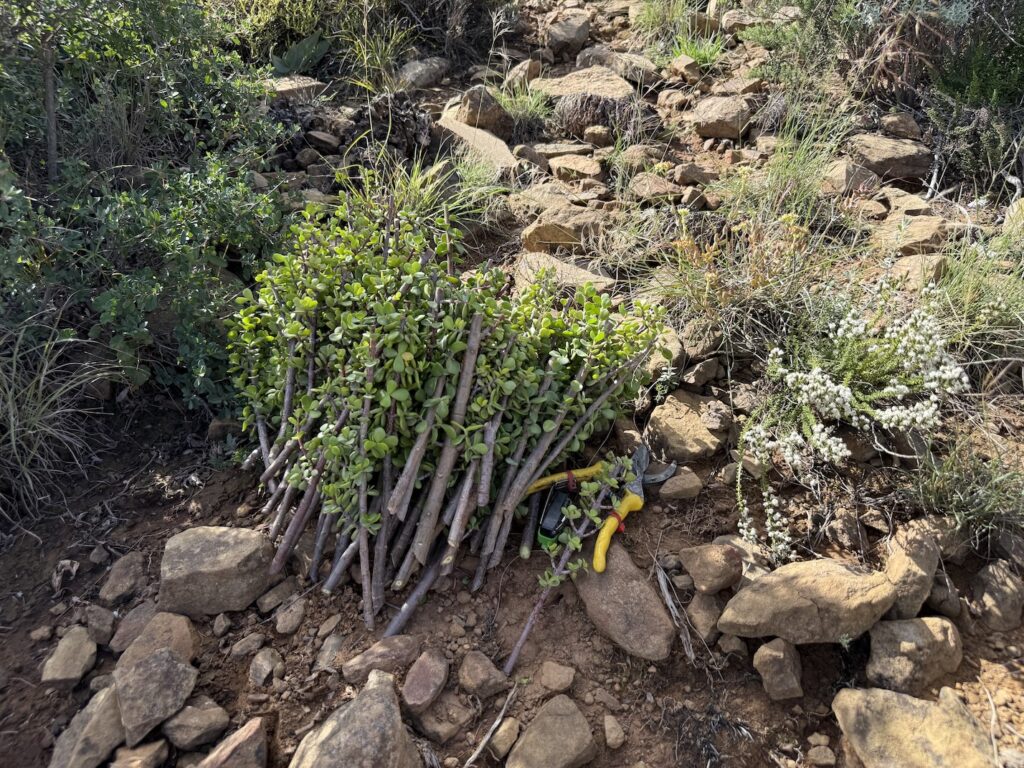
When implemented at scale and maintained over time, nature-based climate solutions can deliver long-term climate benefits. The Eastern Cape Restoration Project shows how ecological restoration can help to sequester carbon while providing wider environmental benefits.
Scientific studies estimate that intact Spekboom-dominated thicket ecosystems can store over 200 tonnes of carbon per hectare in vegetation and topsoil. Restoration efforts aim to gradually rebuild this carbon stock from degraded baseline conditions. It is estimated that, provided environmental conditions remain favourable and browsing pressure is effectively managed, restored sites can approach the carbon storage levels of intact thicket ecosystems within approximately 35 to 50 years.
Restoring biodiversity in South Africa’s thicket ecosystems
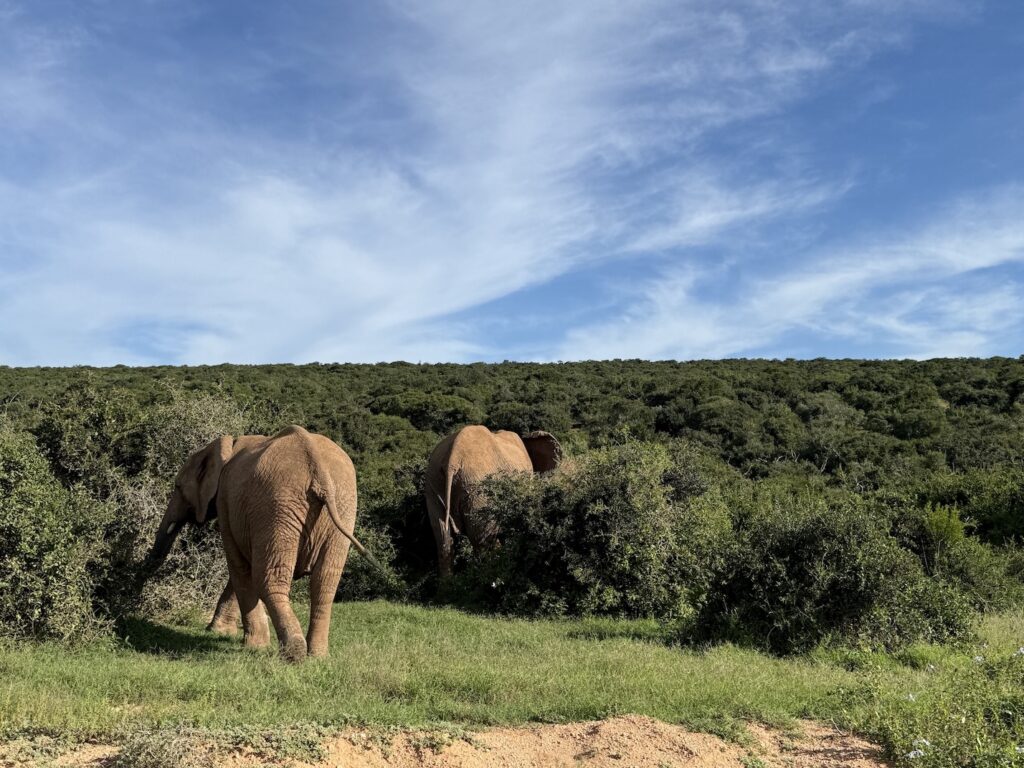
The benefits of restoration extend beyond carbon sequestration. Healthy thicket ecosystems support a rich diversity of plant and animal species, as well as providing important ecosystem services. As Spekboom vegetation becomes established, conditions improve for other native plant species to return naturally. This gradual recovery process can increase habitat availability for local wildlife and strengthen the resilience of the ecosystem. Restoring vegetation cover also reduces soil erosion and improves water infiltration, supporting the long-term health of the landscape.
By rebuilding the ecological functions lost through decades of degradation, restoration contributes to the recovery of a more diverse and resilient ecosystem.
Supporting local communities through restoration
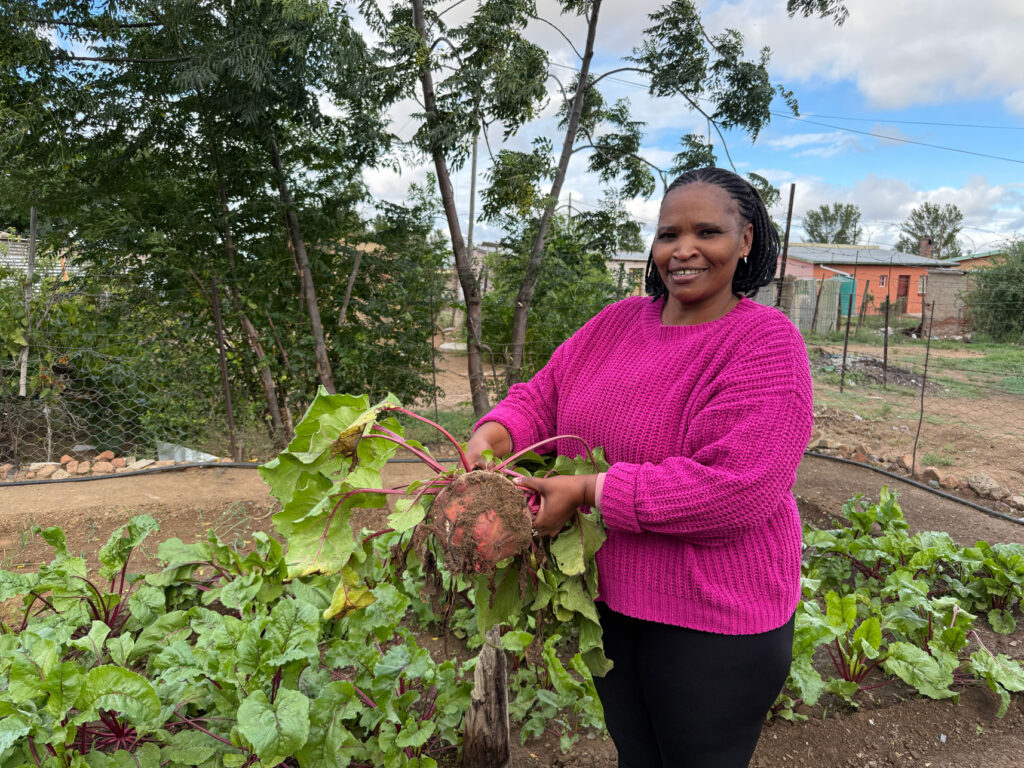
The Eastern Cape Restoration Project delivers socio-economic benefits to a region where unemployment rates remain high.
Local community members are directly involved in project activities, such as collecting cuttings, planting, maintenance and monitoring. These activities create employment opportunities while helping to build practical skills and environmental knowledge.
Workers participate in regular toolbox talks, which cover topics such as environmental stewardship, climate change, labour rights, health and safety, and financial literacy. The project also supports livelihood diversification by providing training opportunities in areas such as beekeeping and conservation guiding.
In addition to direct employment, the initiative engages with local communities by holding community events, supporting local schools, and distributing home vegetable garden kits to help ensure household food security.
Looking beyond carbon
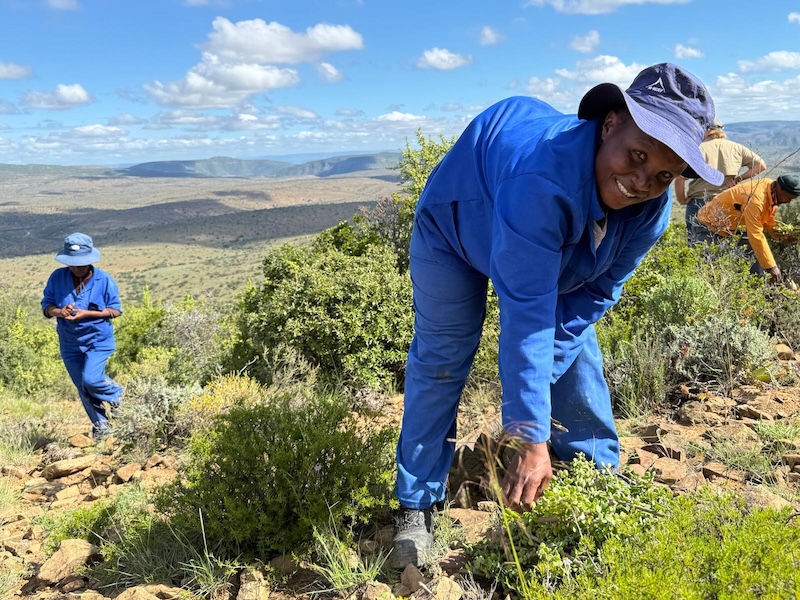
Taking effective climate action increasingly requires an approach that addresses multiple environmental and social challenges simultaneously. Ecosystem restoration projects, such as the Eastern Cape Restoration Project, demonstrate how climate mitigation, biodiversity recovery, and community development can be advanced through a single intervention.
By restoring indigenous Spekboom thicket across degraded landscapes, the project is helping to rebuild ecosystem health, create local opportunities, and support long-term carbon sequestration. The project’s impact illustrates the potential of nature-based solutions to generate measurable benefits for people, the climate and nature.